repair costs
Spark Plug Replacement Cost
$115–$400 on a four-cylinder, $250–$700 on most V6s, and higher on engines where the coils, intake or covers have to come out to reach the plugs. Published estimates disagree by 3× — this page explains why.
Estimated total
$115–$700
- Parts
- $20–$240 set of plugs
- Labour
- $60–$460
- Shop time
- 0.5–3 hours
Cost figures are national US estimates for planning purposes. Actual pricing varies with your vehicle, engine, location, shop labor rate, and whether OEM or aftermarket parts are used. Always get a written quote before authorizing work.
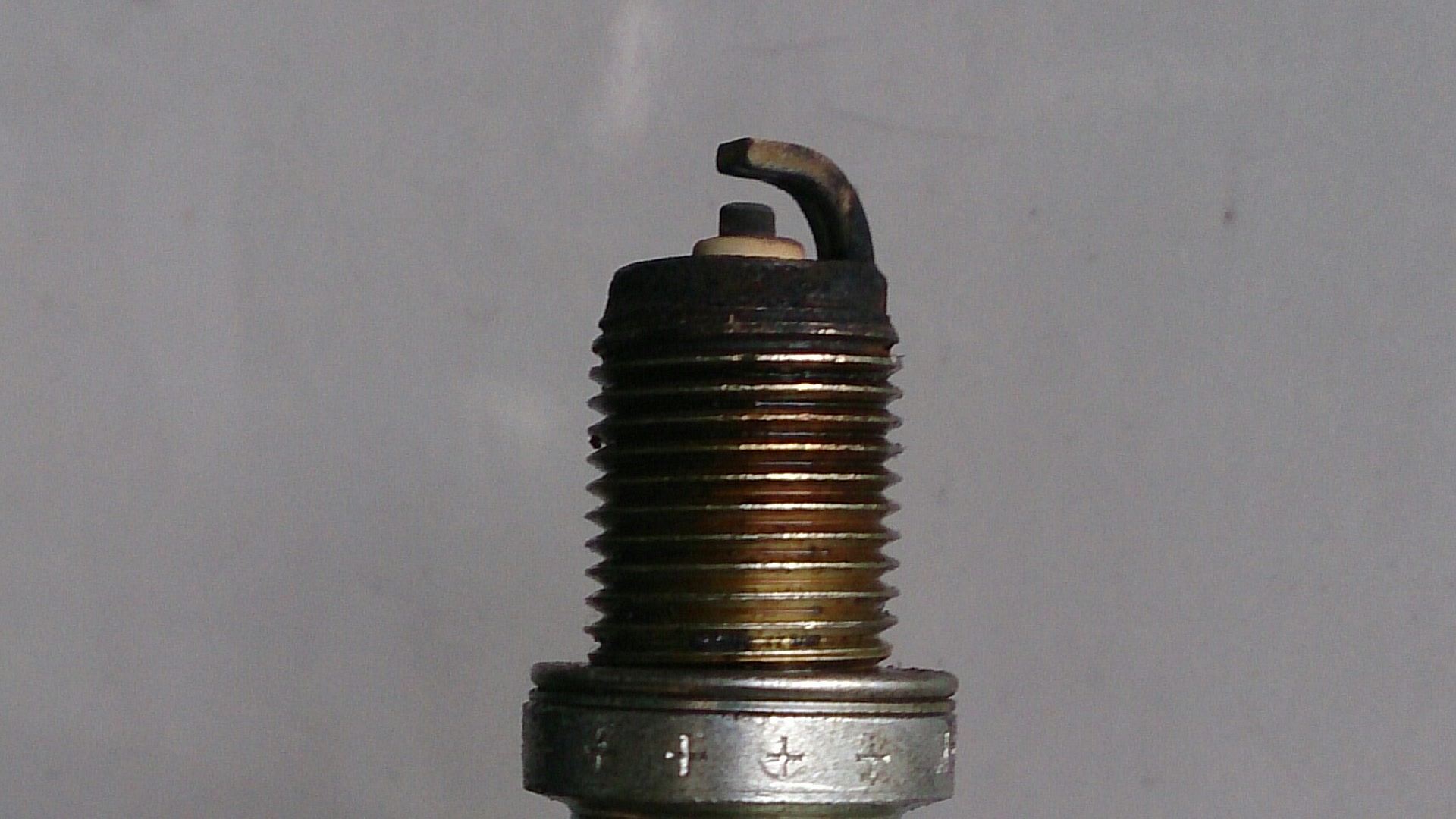
Photo: ProjectManhattan / CC BY-SA 3.0 / Wikimedia Commons
Where you get it done
The same job, priced four ways.
Dealer
$250–$700
OEM plugs and factory torque spec. Justified on the engines that use one — GDI engines with a specific carbon-cleaning procedure, and any coil-on-plug layout where the coils are due for inspection at the same interval.
Independent shop
$180–$500
The right choice for most owners. A shop familiar with your make already knows whether the intake manifold has to come off (some transverse V6s) or the plugs unscrew from the top with a coil pull (most four-cylinders).
National chain
$116–$364 Thumbtack marketplace range
The lowest quotes usually cover an accessible four-cylinder with a straight plug swap. On a V6 with rear-bank access issues, chain quotes climb toward the independent range — ask whether coils are being inspected while access is open.
Do it yourself
$20–$240 plugs only, plus a torque wrench
A four-cylinder on an owner's driveway is a 45-minute job. A transverse V6 is not, because the rear bank sits against the firewall. Plugs must be torqued to spec — over-tightening cracks the porcelain, under-tightening lets combustion gases past the seat and destroys the threads.
What moves the price
| Factor | Effect on price |
|---|---|
| Number of cylinders | A four-cylinder uses 4 plugs, a V6 uses 6, most V8s use 8, and Ford's older 3-valve modular V8 uses two per cylinder — 16 plugs total. Parts scale linearly; labor does not, because access dominates. |
| Plug material | Copper $2–$5 each, platinum $6–$12, iridium $8–$25, laser iridium and specialty OEM $20–$40. Using a shorter-life copper plug on an engine specced for iridium halves your interval, so material choice is not a free saving. |
| Access and disassembly | Transverse V6s often need the upper intake manifold removed to reach the rear bank — 1 to 2 hours of extra labor and a new intake gasket. Some turbo four-cylinders route boost pipes over the coils. The plug set is $40; the labor to reach it is where the quote grows. |
| Coils and boots inspected or replaced | On any coil-on-plug engine, the coils and rubber boots are the same age as the plugs. If a coil measures out of spec or a boot is oil-soaked from a valve cover leak, replacing it while access is open is $30 to $110 in parts and near-zero extra labor. Skipping it now means paying the access twice. |
| Regional labor rate | A 1.5-hour V6 job spans $135 to $330 in labor alone across the $90 to $220/hour range that independent shops charged in 2026. This is the repair where a metro-area quote and a suburban quote are farthest apart. |
Examples by vehicle
Parts pricing and shop time both scale with the vehicle.
- 2021 Honda Civic (1.5T)$180–$320
- 2021 Toyota Camry (2.5L)$170–$300
- 2021 Ford F-150 (5.0L V8)$260–$520
- 2021 Chevrolet Silverado 1500 (5.3L V8, DFM)$290–$600
Why published estimates disagree by 3×
Search results for this repair carry ranges from about $116 (Thumbtack's marketplace low) to $397 (RepairPal's national average). Different sources are not measuring different markets — they are measuring different jobs.
| Source | Range | What it assumes |
|---|---|---|
| RepairPal | $284–$397 | National average across engines, coils inspected |
| Jerry | $151–$161 | Four-cylinder, plugs only |
| Thumbtack | $116–$364 | Marketplace low from pros bidding on visible-plug engines |
| AAA (Your Driving Costs) | $100–$250 | Owner-manual interval plugs, no coils |
None of these are wrong for the job they describe. The right question is not "what is the average" but "what am I actually paying for." That is coil inspection, boot condition, whether the engine needs disassembly to reach the plugs, and the material spec the manufacturer requires. See how often to change spark plugs for the interval side of the same story.
When plugs actually need to come out
The plug material on the box is a marketing category, not a service interval. Manufacturers publish intervals ranging from 45,000 miles on some turbo GDI engines to 120,000 miles on Toyota's 2.5L — a 2.7× spread within one model year. Your owner's manual is the only figure that applies to your car.
- Owner's manual interval reached — the default reason, on the correct plug material for your engine.
- Rough idle, hesitation or a P030x misfire code — a fouled or worn plug usually shows here first. Inspect the coil and boot on the affected cylinder while it is open.
- Recent flood damage or valve cover leak — oil in a plug well shorts a coil, and replacing a coil without replacing the plug and cleaning the well is a return visit.
- Diagnosing a fuel economy drop of more than about 10% with no other cause found on scan data.
Preventive replacement before the manufacturer interval is common but not usually justified. The classic "new plugs every year" advice comes from carbureted engines that no longer exist in the US market.
Coils, boots and the second half of the quote
Most engines built after about 2005 use coil-on-plug ignition: one small coil bolted directly to each spark plug, with a rubber boot sealing the connection. When plugs come out, every one of those coils and boots is exposed.
- Coils are consumables, not lifetime parts. Failure rates climb sharply past 100,000 miles.
- Boots harden, crack and leak spark to ground. A cracked boot causes a misfire that fresh plugs will not fix.
- A single coil is $30 to $110 in parts and one bolt to swap while the plug is out. A coil replaced later is the same part plus the labor to get back to it.
Being asked whether you want the coils inspected — or replaced on the older side of the range — is not upselling. It is the question a competent shop asks. See P0300 — random cylinder misfire for what a failing coil looks like on scan data.